
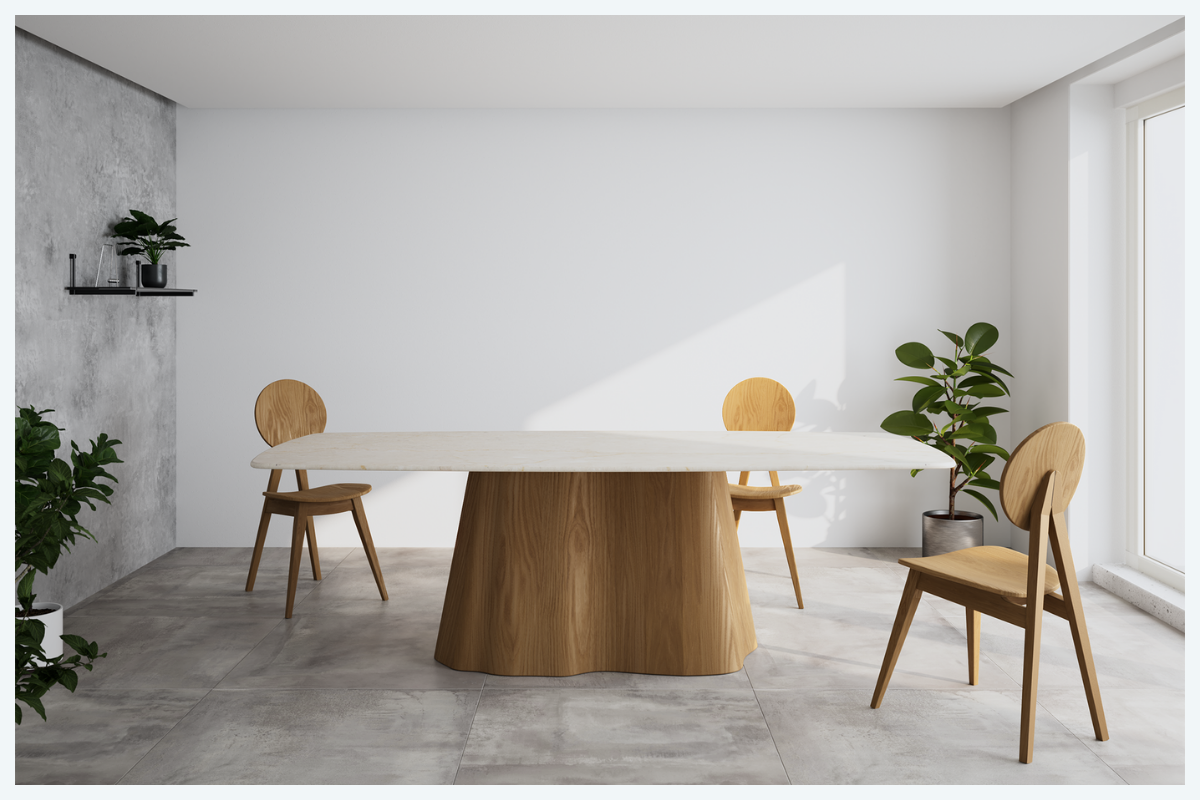
In a world where the continuous accumulation of material goods becomes a symbol of wealth and a form of social validation, and access to products from the other side of the world is just a click away, quiet luxury comes to show us that there's another way. Unlike ostentatious opulence, this concept redefines the idea of refinement through quality, simplicity, functionality, and timeless aesthetics, across numerous areas of life – clothing, interior design, travel, and beyond.
Quiet luxury – as you've probably encountered it on social media – is more than just a trend: it's an anti-consumerism impulse that encourages us to prioritize quality over quantity and meaningful experiences over immediate gratification.
At the core of this concept lies a life philosophy based on conscious choices and smart investments in quality pieces, distinguished by premium materials and artisanal details, free from eccentricity or visible logos.
What quiet luxury means in interior design
The origins of the quiet luxury concept are rooted in the European minimalism movement and the Japanese philosophy of wabi-sabi, which celebrates natural imperfection and simplicity. However, this trend has been revitalized in recent years as a reaction to excessive consumerism and the culture of ostentation, gaining popularity lately, especially through cinema and social networks.
In interior design, quiet luxury is closely linked to the minimalist style, where every piece of furniture is chosen with a precise purpose, to create a balanced, functional, and sophisticated space.
The essence of this concept in interior design lies in the careful selection of natural materials and textures, such as solid wood, stone, marble, or premium fabrics, which combine refined aesthetics with durability. Unlike ephemeral trends, quiet luxury celebrates timeless pieces that endure through time, both in quality and design.
Quiet luxury is not limited to interior design — you can find it in fashion, gastronomy, and even in your daily choices, such as adopting a simpler, more conscious lifestyle. For example, in fashion, this concept promotes superior quality clothing with classic lines, without obvious logos, reflecting good taste rather than overt display of status. Thus, quiet luxury becomes a subtle declaration of personal refinement in all aspects of life.
Simple, yet not austere. Quality over quantity
Adopting the quiet luxury philosophy implies a transition from visual overload to a sophisticated simplicity. How do you do this? By acquiring only objects that truly add value to your space, objects with a precise purpose and a story.
Even if artisanal objects are sometimes harder to find than mass-produced items, and their creation requires a longer waiting time, you know that, in the end, you receive a truly unique object that will bring personality to your decor.
Beyond the simple and refined aesthetic it promotes, quiet luxury encourages moderate consumption behavior and carefully considered purchases, aligned with your lifestyle. Finding a quality product may require time, patience, and more rigorous research, but if you're reading this article, we know you're willing to allocate these resources for a special product.
Most of the time, premium quality products are manufactured using sustainable techniques and ethical labor practices, aspects often neglected in mass production. Thus, you support the values that define you and surround yourself with objects created with respect for people and nature.
More is not always better, and quiet luxury perfectly illustrates the saying "less is more." When you choose premium objects and furniture pieces with a contemporary design, personalized to fit your space, you can transform your home into a simple, elegant, and welcoming place.
Adopt quiet luxury on an accessible budget
Although quiet luxury is often associated with an exclusive lifestyle, adopting this concept does not necessarily require an exorbitant budget. The key lies in smart choices. The most effective approach is to allocate a larger portion of your decorating budget to a few key pieces that will become the focal points of the decor and that will not depreciate over time.
For example, a solid wood table with a ceramic top, a comfortable sofa with a solid construction and quality upholstery, or a piece of art by a renowned artist can completely transform the atmosphere of a room, proving its value year after year. Subsequently, you can balance the budget by choosing more affordable accessories and decorative objects that still adhere to the principles of quiet luxury — simplicity, naturalness, and functionality.
Accessories such as natural fabrics, minimalist design lamps, or artisanal ceramic objects can add a touch of refinement without requiring a significant investment. Textiles and decorations have a shorter lifespan and can differ from season to season, so you can allocate a smaller budget to them without remorse.
Thus, through a balanced combination of valuable pieces and affordable decorations, you can create a space that truly reflects quiet luxury, without compromising on aesthetics or quality.
Also, if your budget doesn't allow you to purchase a certain valuable piece at the moment, wait. Avoid rushing when it comes to main furniture pieces that are subject to daily use.
Compromises in quality when it comes to furniture or another important object in your home translate, in the medium term, into repairs or even the need to replace the product after a few years. In this case, in the end, you end up paying a higher bill than if you had chosen a premium product from the start.
Quiet luxury at home, in 5 simple steps, for a timeless interior
1. Opt for natural materials
Solid wood, natural stone, marble, ceramics, linen, wool, or organic cotton are essential for arranging a simple yet sophisticated space. These not only last over time but also create a warm and authentic atmosphere.
2. Choose neutral colors
An interior true to the quiet luxury concept promotes a color scheme that induces a state of calm and balance. Neutral tones — beige, light gray, creamy white — complemented by subtle accents of earthy colors or pastels, can help you achieve a refined ambiance that invites relaxation and disconnection.
3. Create depth with textures
Perhaps a color scheme based on neutral colors seems monotonous, but you can add depth and create areas of interest using textures. A wall with decorative plaster or a 3D effect wallpaper, a wooden furniture piece, artisan-crafted, or a lighting fixture with a unique texture can successfully compensate for the lack of ornamentation.
4. Choose contemporary, minimalist design furniture
Avoid pieces with excessive ornamental details that visually clutter the space. To defy trends, opt for furniture with simple lines, balanced proportions, lightly textured surfaces, and subtle details.
5. Both form and functionality
Contrary to the well-known design principle from the beginning of the 20th century, "form follows function," every piece you include in your home should equally combine aesthetics with pragmatism. Acquire objects that have a well-defined functionality and role and that integrate naturally into your home decor.
Quiet luxury, a positive impact on your home and life
Quiet luxury is not just about how a home looks, but about how it makes us feel. The concept is about creating a space that inspires tranquility, balance, and natural elegance, a space that is an extension of our way of being.
By choosing objects with contemporary design, natural colors, and textures with personality, every corner of your home becomes an expression of subtle refinement.
By adopting the quiet luxury philosophy, you free yourself from ephemeral trends and invest in pieces that impress not only through their physical appearance but also through the story they tell. A story about simplicity, respect for materials, and an authentic lifestyle.

Leave a comment
All comments are moderated before being published.
This site is protected by hCaptcha and the hCaptcha Privacy Policy and Terms of Service apply.