
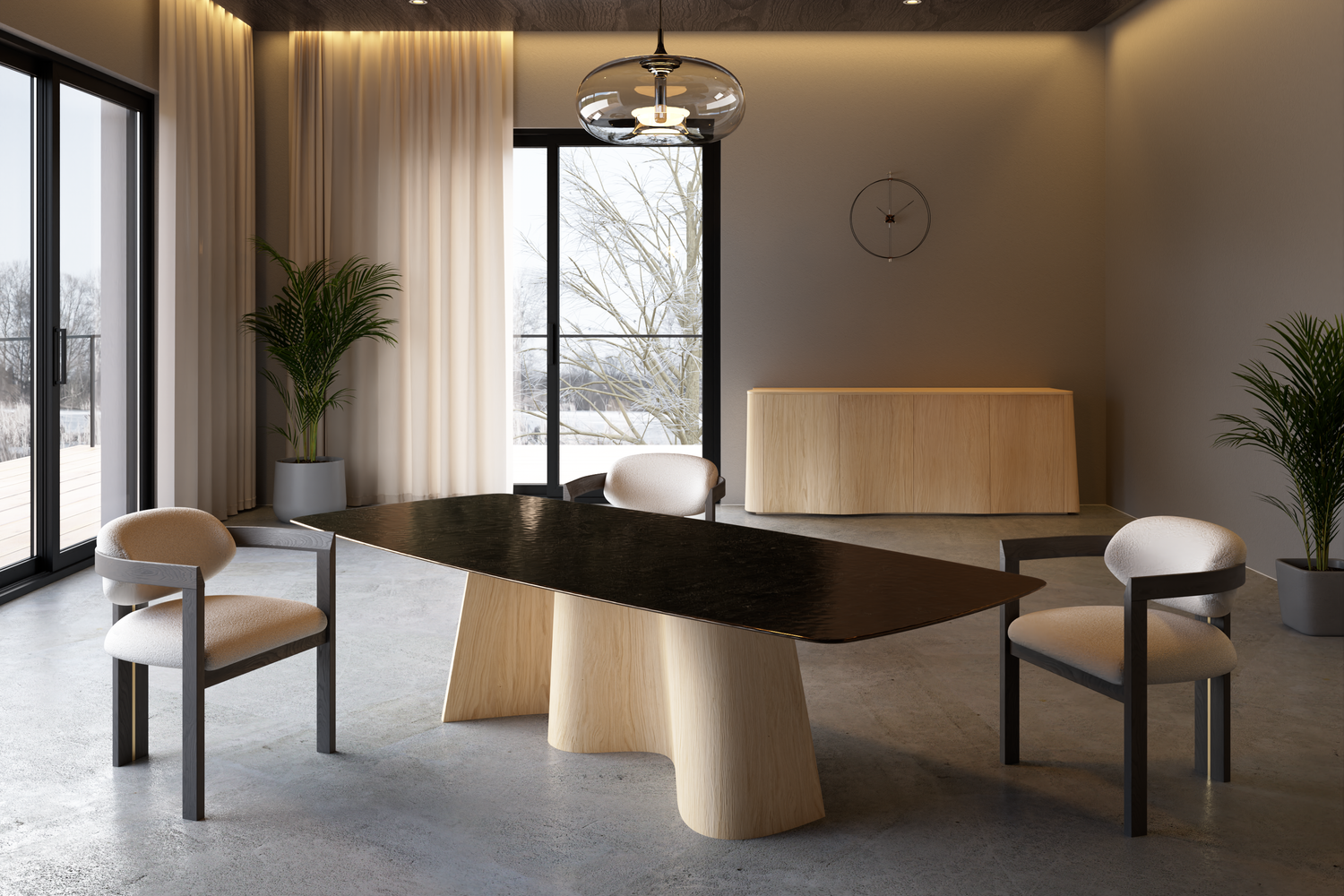
Interior design is the art of transforming an empty space into a home that reflects our personality, values, and lifestyle. While trends come and go, the best ones offer us valuable inspiration and ideas to turn our living space into a harmonious and functional environment.
In 2025, interior design embraces naturalness, sustainable materials, textures, and organic forms. Biophilic design, curved lines, sustainable choices, and a new type of minimalism are just a few of the trends we will frequently encounter throughout this year.
Below, we present the 8 most important interior design trends and how you can adapt them to your home.

1. Biophilic Design - Connect with Nature
Biophilic design isn't going anywhere in 2025. On the contrary, capitalizing on our growing need to spend time in nature, it is gaining more and more ground. Biophilic design emphasizes the integration of natural elements into our homes, but also goes beyond merely ticking style boxes in our homes, promoting physical and mental well-being through proximity to nature.
- Furniture. Choose pieces made from solid wood, treated with natural finishes. Furniture with organic lines and curved silhouettes creates a welcoming ambiance, giving us a sense of comfort and protection.
- Plants. Include large indoor plants, such as ficus or monstera, to bring freshness and vitality to the decor. Place plants in your workspace, as well as in the living room, dining room, or transition areas of your home.
- Natural light. Maximize natural light with sheer, light-colored curtains or by strategically placing mirrors, which reflect and amplify it, visually enlarging the space.
- Materials. Alternate textures through combinations of wood, natural stone, and eco-friendly textiles.

2. Curved Furniture - Cultivating a Sense of Comfort and Protection
Fluid lines and organic design are among the most notable trends in interior design for 2025. This trend manifests in dining tables with rounded edges and arc- or column-shaped legs, storage units with organic fronts, armchairs with sinuous forms, or minimalist benches constructed from molded wooden plywood.
- When it comes to large furniture pieces, choose models with rounded edges and corners and 3D fronts with organic surfaces. These "soften" the space and are much friendlier to the touch than models with straight corners.
- A dresser with rounded profiles or a buffet with a sculptural design will contribute to a harmonious space and will undoubtedly become a focal point of the area where they are placed.
- Complete the space with chairs designed for comfort and relaxation, featuring wooden frames and upholstered with soft natural materials or recycled materials, for optimal comfort and a pleasant tactile contrast.

3. Natural and Sustainable Materials - A Warm and Soothing Ambiance
Materials sourced from nature and minimally processed, such as wood, natural stone, linen, wool, jute, and cotton, create a warm, inviting, and authentic ambiance. In addition to the visual effect they produce, these materials offer a comforting and familiar tactile experience.
- Furnish your space with solid wood and recycled wood furniture, clay vases and pots, jute storage baskets, and linen curtains.
- Choose furniture pieces that combine wood with natural stone for a precious look and a timeless design that will elegantly pass the test of time.
- Use wool rugs and throws for added comfort.
- If you have a piece of furniture that no longer has its former shine, but is still functional, don't rush to replace it; instead, find a restorer and bring it back to life.

4. Maximalist Minimalism: Simplicity + Expressiveness
Seemingly an oxymoron, this trend refers to designs that combine the essence of minimalism – clean forms, functionality, and visual order – with expressive accents, sophisticated details, and strong contrasts.
Maximalist minimalism does not mean cluttering the space with objects, but rather strategically using statement pieces to add personality and depth. Premium materials, rich textures, and vibrant colors are integrated into a balanced decor without compromising basic simplicity.
Thus, maximalist minimalism succeeds in creating refined and well-structured interiors, but with a strong visual impact.
- Choose contemporary furniture, devoid of ornamentation, but which conveys emotion through form, color, texture, artisanal details – a dining table as a work of art or a solid wood buffet with parametric design can create a visual area of interest in a non-ostentatious way.
- Allow only a few key pieces to shine in your home's decor and complement them with objects and accessories that enhance them, but do not distract from the central theme of the design.
- Maintain a neutral background, but introduce impactful accessories, such as a rug with an ethnic, geometric, or abstract pattern and a statement lighting fixture.
- For decorations, you can consider a work by an artist you admire, small sculptures, cherished souvenirs and statues acquired from travels, minimalist design bookends, large indoor plants, etc. - objects with special meaning or a well-defined role in the space.
- Experiment with material mixes: solid wood combined with glass, metal, natural stone, or luxurious upholsteries, such as velvet.
- Less is more - stick to premium quality pieces that fill the space with texture and discreet accents, especially when it comes to long-term investments - furniture, sofa, finishes.

5. Integration of Handicrafts - The Need for Authenticity
Bombarded by mass-produced items with short lifespans and rapid rotation, we are increasingly looking to integrate unique, meaningful objects that tell a story into our homes. The inclusion of handcrafted objects in interior design is by no means a new or fleeting trend, but rather gains even more momentum in 2025.
Custom-made furniture crafted according to your preferences, using artisanal techniques, and bearing that unique human touch, will always remain relevant in the narrative thread of your home.
- Whenever possible, try to purchase local products made by domestic producers, artists, and designers. Beyond getting to know their business and story closely, they offer an authentic and personalized shopping experience.
- Compared to mass-market products, a lot of passion and meticulousness are invested in the production of each handcrafted item. Thus, you invite objects into your home that have been created with joy and positive energy, tailored specifically for you.
- From furniture to decorations, textiles, lighting fixtures, and paintings, objects created through artisanal processes are timeless and will undoubtedly bring that touch of elegance and authenticity you desire in your home.

6. Natural Colors, Earth Tones & Textured Surfaces
Earthy colors, inspired by nature, also dominate the palette of 2025. Shades of beige, terracotta, olive green, and the natural coloration of wood create warm and sophisticated interiors, easily adaptable to any design style. The tone in this direction is even confirmed by Pantone's color of the year - Mocha Mousse.
Textures, textures, textures. Colors play an important role in any space, but without the use of textured surfaces, it will appear monotonous and lacking in depth.
- Opt for upholstery in earthy shades - for a refined and comfortable feel.
- Integrate the famous sage green into your decor for an extra touch of calm and freshness.