
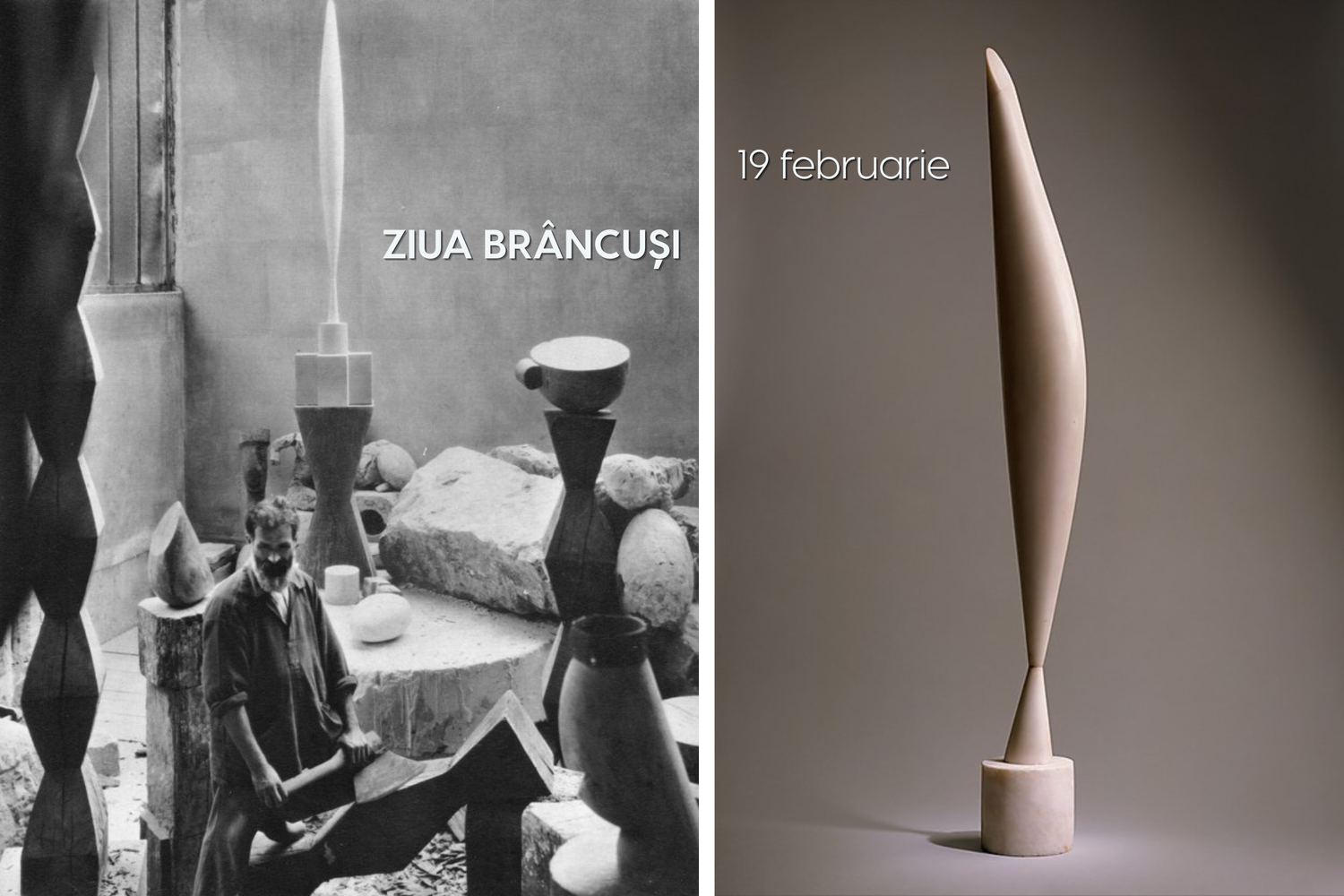
On February 19th, we celebrate the National Day "Constantin Brâncuși," an occasion to return to one of the deepest sources of inspiration for contemporary design.
More than a sculptor, Constantin Brâncuși reformed the modern visual language, being considered an architect of essence and a philosopher of form. His work not only changed the course of sculpture but also decisively influenced how we think about objects, space, and our relationship with matter.
For Nord Arin, Brâncuși represents a constant conceptual benchmark. Beyond forms and proportions, his legacy is found in how we understand design: as a process of refinement, of reduction to essence, and of building a lasting harmony between functionality, material, and expression. His famous quote - "Simplicity is a resolved complexity" - has, over time, become a creative principle that runs through every Nord Arin piece.

On Brâncuși Day, we invite you to explore five essential directions through which the father of modern sculpture influenced Nord Arin's design language and how his work guides us in the design and manufacturing process of contemporary solid wood furniture with a minimalist aesthetic.
1. Reduction to essence: the path to pure form
Brâncuși redefined sculpture through a radical gesture: he eliminated descriptive detail, ornament, and explicit narrative, focusing on the essential form. For him, sculpture should not imitate reality but capture its inner truth. This gave rise to the purified volumes, continuous surfaces, fluid lines, and archetypal silhouettes that became his signature.
This philosophy of reduction to essence is profoundly reflected in Nord Arin's design language. Each piece starts with a fundamental question: what is the necessary form? What can be eliminated without losing meaning? What can be simplified without compromising expression?
The design process thus becomes one of careful selection, not accumulation. The lines are clear, the proportions are balanced, and the geometry is calm, without formal excesses. In Nord Arin furniture, simplicity is the result of a careful analysis of function, structure, and aesthetics, so that every contour, every edge, and every joint has a precise role.
Inspired by the timelessness of Brâncuși's sculptures, Nord Arin pieces are designed for longevity and to remain relevant over time. They do not adhere to ephemeral trends and avoid spectacular decorative formulas, relying instead on a discreet, durable beauty that does not tire the eye and does not lose its relevance. It is an aesthetic of visual tranquility, balance, and coherence, which creates breathable, orderly, and profoundly personal spaces.

2. "Simplicity is a resolved complexity": the process behind simple forms
One of Brâncuși's most famous statements — "Simplicity is a resolved complexity" — brilliantly captures the essence of the creative act. Simplicity is not a starting point but a result. It is not a lack of complexity, but a synthesis of it.
In Nord Arin's design philosophy, this principle translates into a rigorous creative process, where each piece goes through several stages of exploration, testing, and refinement. The final, seemingly simple form, is the result of a complex journey that combines ergonomic research, structural analysis, and the study of proportions and materials.
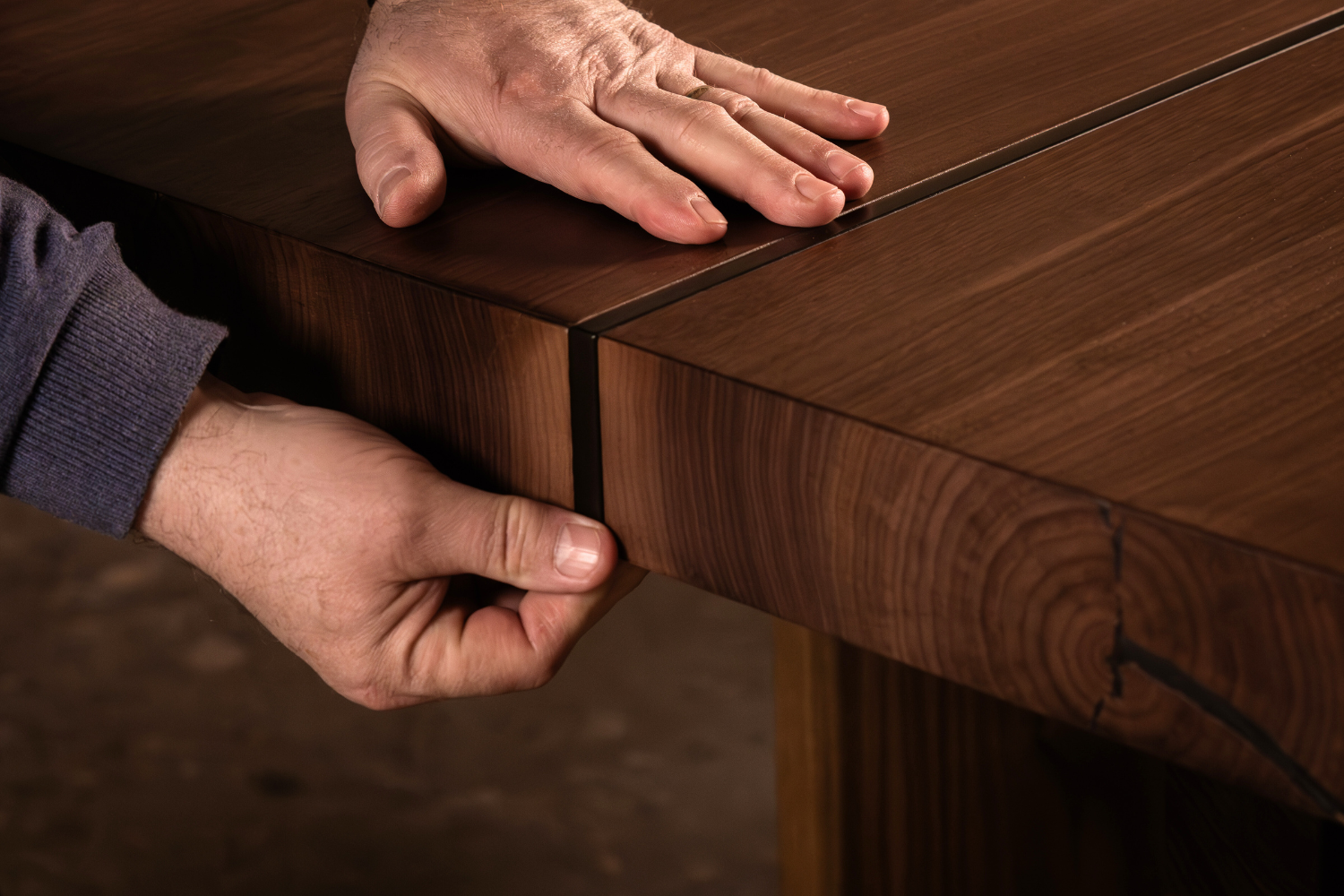
Solid wood, the brand's fundamental material, imposes its own laws. Every fiber, every knot, and every chromatic variation demands attention and respect. Designing a piece of furniture involves a deep understanding of wood's behavior over time, how it reacts to light, humidity, wear, and the passage of years. Only through this careful dialogue with the material can a simple, coherent, and durable form be achieved, as well as surfaces that age gracefully.
Thus, visual simplicity hides a wealth of subtle decisions: carefully calibrated proportions, invisible joints, carefully rounded edges, natural finishes that highlight the wood's texture without masking it. When you look closely at a dining table or a Nord Arin sideboard, you realize that nothing is accidental, nothing is redundant.
Brâncuși is known for his extremely rigorous finishing process, meticulously polishing surfaces until they acquired an almost immaterial clarity and purity.
Fascinated by his technique, at Nord Arin, we pursue the same ideal of perfect form through a meticulous process of finishing and refinement. The result is furniture that exudes clarity, balance, and a calm, unostentatious elegance.

3. Respect for the material: wood as a living language
Brâncuși had a profound relationship with the materials he used — wood, marble, limestone, bronze — each chosen and treated according to its intrinsic character. For him, the material was not merely a support for the form, but a creative partner, with its own voice and personality.
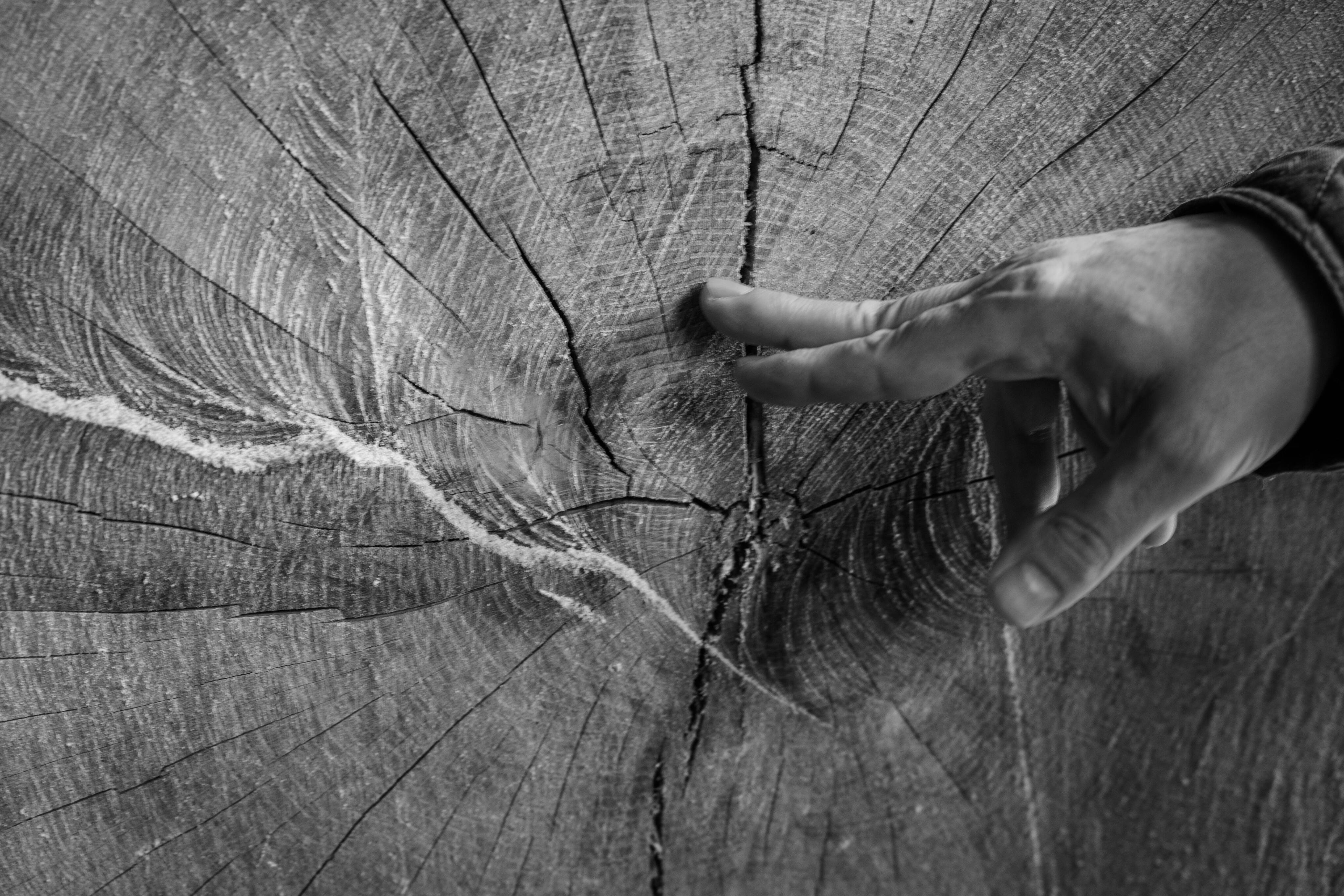
This vision is also essential for Nord Arin. Solid wood is not just an aesthetic or functional choice, but a statement of values. It is a living material, carrying within it the memory of nature, the rhythm of the seasons, and the uniqueness of each tree. Every piece made of solid wood is, by definition, unrepeatable.
In Nord Arin's design, wood is allowed to express itself freely. The texture, grain pattern, and natural peculiarities are highlighted, while finishes are chosen to protect the material, preserve its authenticity, and tactile depth.
This honest relationship with the material creates an emotional connection between the object and the user. Furniture is not perceived as a standardized product, but as an object with identity, bringing a fragment of the natural world into the interior space. It is an extension of Brâncuși's philosophy, which saw in material not just a means, but an end in itself.

4. The balance between strength and delicacy
In Brâncuși's sculpture, monumental volumes coexist with a subtle fragility of lines. It is a permanent interplay between massive and ethereal, between stability and movement. This balanced tension gives his works a unique strength and timeless elegance.
In Nord Arin creations, the same principle translates into a careful balance between structural robustness and aesthetic refinement. Solid wood offers solidity and durability, while fluid lines, fine proportions, and discrete, hand-crafted details add delicacy and grace.
The result is furniture that inspires confidence and calmness alike; that commands presence without dominating the space. It is an aesthetic of balance, shifting the focus from functionality to harmony and reflection.

5. Furniture as an experience, not an object
For Brâncuși, sculpture was not just an object, but a spiritual experience, an invitation to contemplation. His works are not exhausted by a quick glance, but demand time, patience, and openness.
Over the years, the same philosophy has come to be reflected in Nord Arin's design language. Furniture is not conceived as a transient decorative presence, but as a companion of daily life, gradually revealing its qualities, evolving with the space and the people around it. The texture of the wood, the proportions, the way light falls on surfaces - all contribute to a complete sensory experience that invites discovery.
It is furniture that does not demand attention, but earns it over time; that does not impress with artifice, but with coherence, durability, and refinement.

An echo across time
Constantin Brâncuși's work continues to inspire generations of artists, architects, and designers worldwide, transmitting echoes with strong resonance across time, cultures, and generations.
For Nord Arin, this legacy is not just a source of inspiration and a perpetual lesson in genius, but also a compass that brings clarity to our creative process, compelling us to always seek the simplest and most ingenious solution and to restore the raw expressiveness of matter through pure yet profound forms.
Through reduction to essence, deep respect for material, and the pursuit of authentic simplicity, Nord Arin furniture becomes part of a subtle dialogue between form and matter. It is a dialogue across time, between tradition and contemporaneity, between craftsmanship and innovation, between art and functionality.
In a culture of rapid consumption, which often confuses speed with progress and abundance with value, returning to essence becomes an act of lucidity and responsibility. And simplicity, as Brâncuși taught us, remains the highest form of refinement.
Discover Nord Arin collections and how simplicity takes shape in solid wood!
Photo source: Internet Archive

Leave a comment
All comments are moderated before being published.
This site is protected by hCaptcha and the hCaptcha Privacy Policy and Terms of Service apply.