
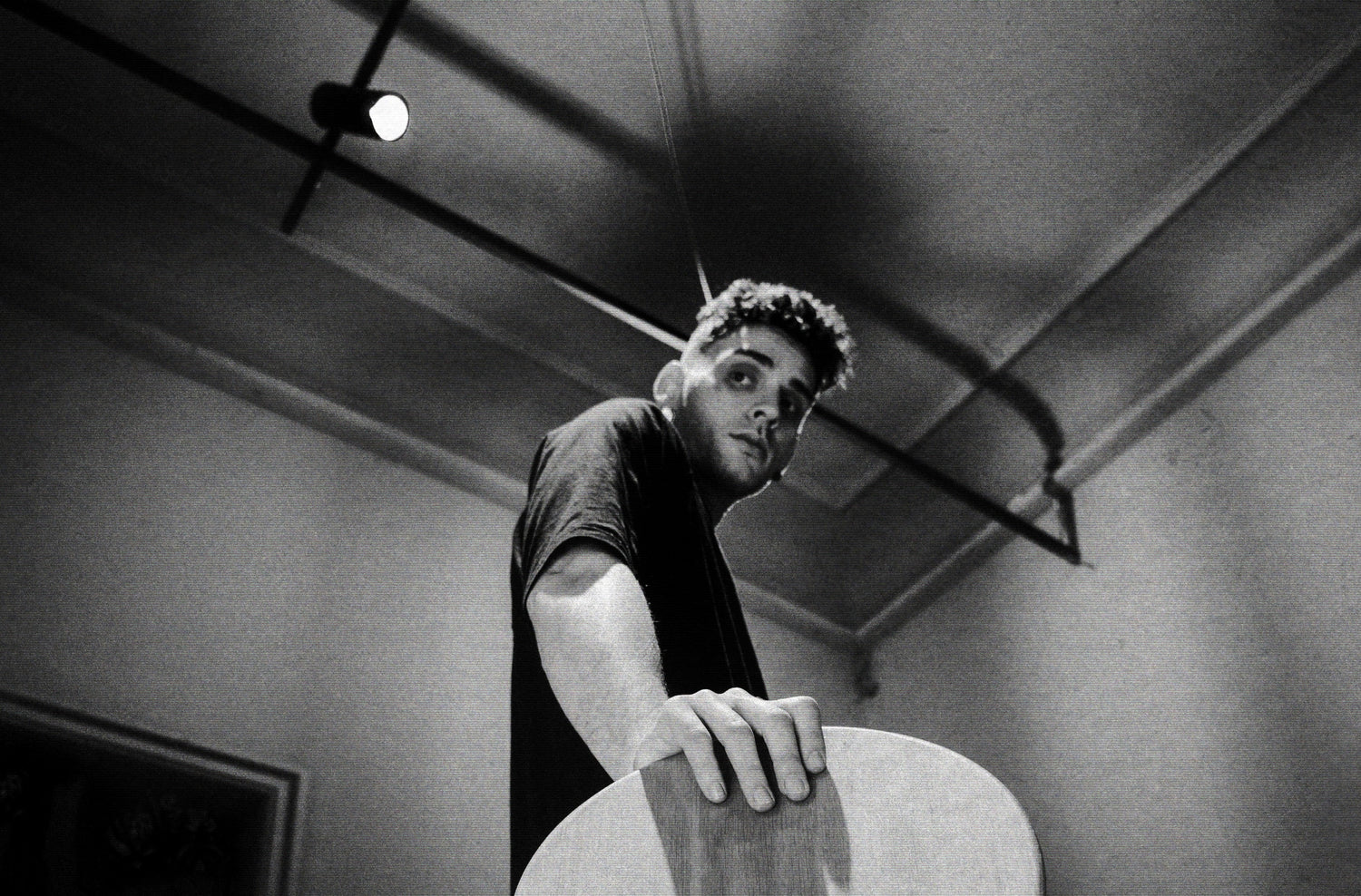
If you've been following us for a while or have encountered our furniture pieces at design fairs and exhibitions, chances are you've heard of VOICU, the young designer who creates a significant portion of Nord Arin's designs.
As a representative of the fifth generation continuing the tradition of valuing wood in furniture pieces at Nord Arin, VOICU carries on his family's legacy with an added touch of contemporary expressiveness and sophistication. In recent years, VOICU, alongside his father, Viorel Crețu, has succeeded in establishing a new design language for the company's products, recognized and appreciated internationally.
With a keen artistic intuition and a fine sense of the reality in the world of architecture and interior design, VOICU manages to create furniture pieces that meet the aesthetic and functional needs of contemporary living spaces. Through his characteristic minimalist style, the Nord Arin designer succeeds in anticipating trends that become permanent design principles and aesthetic ideals in our homes.
VOICU Biography
A graduate of the Faculty of Architecture at the "Ion Mincu" University of Architecture and Urbanism (2025) and the University of Art and Design in Cluj-Napoca, specializing in Design (2018), VOICU tenaciously combines the two fields he is passionate about - product design and architecture.  His passion for creation, for wood, and for building from scratch was undoubtedly instilled in him from childhood by his grandfather and father, later guiding his steps towards the natural decision to pursue his studies in these creative fields.
His portfolio includes landmark furniture pieces in Nord Arin's portfolio, which in the last seven years have been a constant presence at renowned design fairs in Milan, New York, Dubai, Paris, and Bucharest.
In Romania, VOICU's creations have been appreciated by specialized audiences at the Romanian Design Week (in 2020 - LUNA Bench and 2025 - Beams Bar), being representative furniture pieces for contemporary Romanian design.
Also, in 2022, the Compas chair designed by VOICU was awarded the prize for "Best Design Object of the Year" at the Oh, DA! Gala. The ingenious object takes its inspiration from nothing other than the circle-drawing instrument that we all used at some point in school. 
VOICU's creations are furniture pieces with clean lines, sculptural silhouettes, that evoke emotion through symbolism, refined simplicity, subtle textures, and artisanal details - but more about his style and what inspires his work, we will learn directly from the source.
Today we get to know VOICU better, the designer and the man behind the pencil.
1. What most often inspires you in your design and architecture projects? Do you have a particular architectural style or artistic movement that you especially identify with?
A: I believe inspiration is something that comes with work and knowledge.
There's often this myth of artistic inspiration striking you suddenly like lightning when you least expect it, and then you come up with the most innovative and remarkable ideas and concepts, seemingly detached from some high sphere of thought accessible only to artists.
The truth is, these moments are rare and usually appear as a result of accumulating knowledge and conceptualization effort. Thus, any object you are exposed to can be a source for that inspiration, if you have managed to build an aesthetic and functional culture, and accumulate sufficient rendering techniques through which you can then express what you want. A branch can become a table leg, a compass can become a chair, a wooden beam can become a chest of drawers, etc.
As for a specific architectural style or artistic movement, I haven't actively thought much about it. I think it's becoming increasingly difficult to accurately categorize almost any artistic or decorative product into a specific "box" and label it nowadays, given the growing number of combinations of genres, ideas, objects, materials. Everything is quite eclectic.
I try as much as possible to come up with decorative, functional, and relevant objects that are rooted in the current aesthetic context, whether it's contemporary, modern, parametric, organic, or minimalist design, but also taking into account a local cultural context.
It's something Kenneth Frampton defined as "critical regionalism," in the context of architecture anchored in our times, but which should not be dissociated and indifferent to the place where it should be born, but rather become a temporal extension of local expression.
I try as much as possible to come up with decorative, functional, and relevant objects that are rooted in the current aesthetic context, whether it's contemporary, modern, parametric, organic, or minimalist design, but also taking into account a local cultural context.

2. How do you feel your architectural background helps when creating a new piece of furniture?
A: I believe that architecture design and knowledge provide a good foundation for anyone working in any field related to architecture. And since architecture constitutes 90% of what surrounds us, architects can be quite versatile when it comes to other areas related to aesthetics and functionality.
Almost every decorative object, including furniture, has historically had its visual and functional origin in movements that first appeared as architecture. Whether we're talking about Baroque, Rococo, Romanticism, Neoclassicism, Modernism, or Postmodernism, all of them first emerged as architectural or artistic movements, only to later translate, maintaining scale, into what we now call "design."
Due to its complexity, taking into account aspects related to stability, utility, and aesthetics that must be harmonized, architecture, essentialized and reduced to a scale closer to the human one, becomes furniture.
In conclusion, I could say that an architectural background directly helps me design furniture objects better and more efficiently, and to make sense from all points of view: not just aesthetically, functionally, or in terms of resistance, but all together. If Brâncuși said that architecture is inhabited sculpture, then furniture is the architecture you sit on, sleep on, and eat at. That you live on.
If Brâncuși said that architecture is inhabited sculpture, then furniture is the architecture you sit on, sleep on, and eat at. That you live on.
3. We know that your creative side also manifests itself in music. Where did you learn to play the guitar? Is music another source of inspiration for you or rather a way to disconnect?
A: I first learned to play when I was at the beginning of high school, around 15, at a time when playing the guitar was quite hip. I did this in Piatra Neamț, in a studio and rehearsal room, with a man who has since become my friend and mentor.
I've played in various bands, genres like rock, metal, or hip-hop, meaning what I was listening to at the time, and I still play to this day. It's more of a free-time activity that helps me disconnect and pause the daily rhythm.
4. You grew up in a family where woodworking was elevated to an art form, and this undoubtedly had a significant impact on your later development. What are your first memories related to working with wood?
A: I think among my first memories were climbing on stacks of timber in the factory yard and getting splinters in my palms, and then trying to remove them myself or with the help of my grandmother.
And I also remember making wooden swords or various weapons with the factory machines, either for myself or to play duels with the village kids. I don't know how much that helped me with furniture, but it was fun back then. 
5. Nord Arin is a family business, and ingenuity, creativity, and a passion for building lasting things have been passed down from generation to generation. What is the most valuable lesson you learned from your grandfather and father?
A: I don't know if I can pinpoint one particular lesson I received from my grandfather or father as being the most valuable. I've had and still have an enormous amount to learn. From my father and grandfather, I saw extraordinary work ethic and an immense will to build and excel professionally, but also to help others and be there for loved ones.
But not only from my father or grandfather, I also learned from my mother, in whom I saw patience, compassion, understanding, and wisdom, from my sister, my friends, etc. I am very grateful for the family I was born into, and yes, I consider myself privileged in this regard. 
6. Do you still remember the first piece of furniture you created? How old were you then?
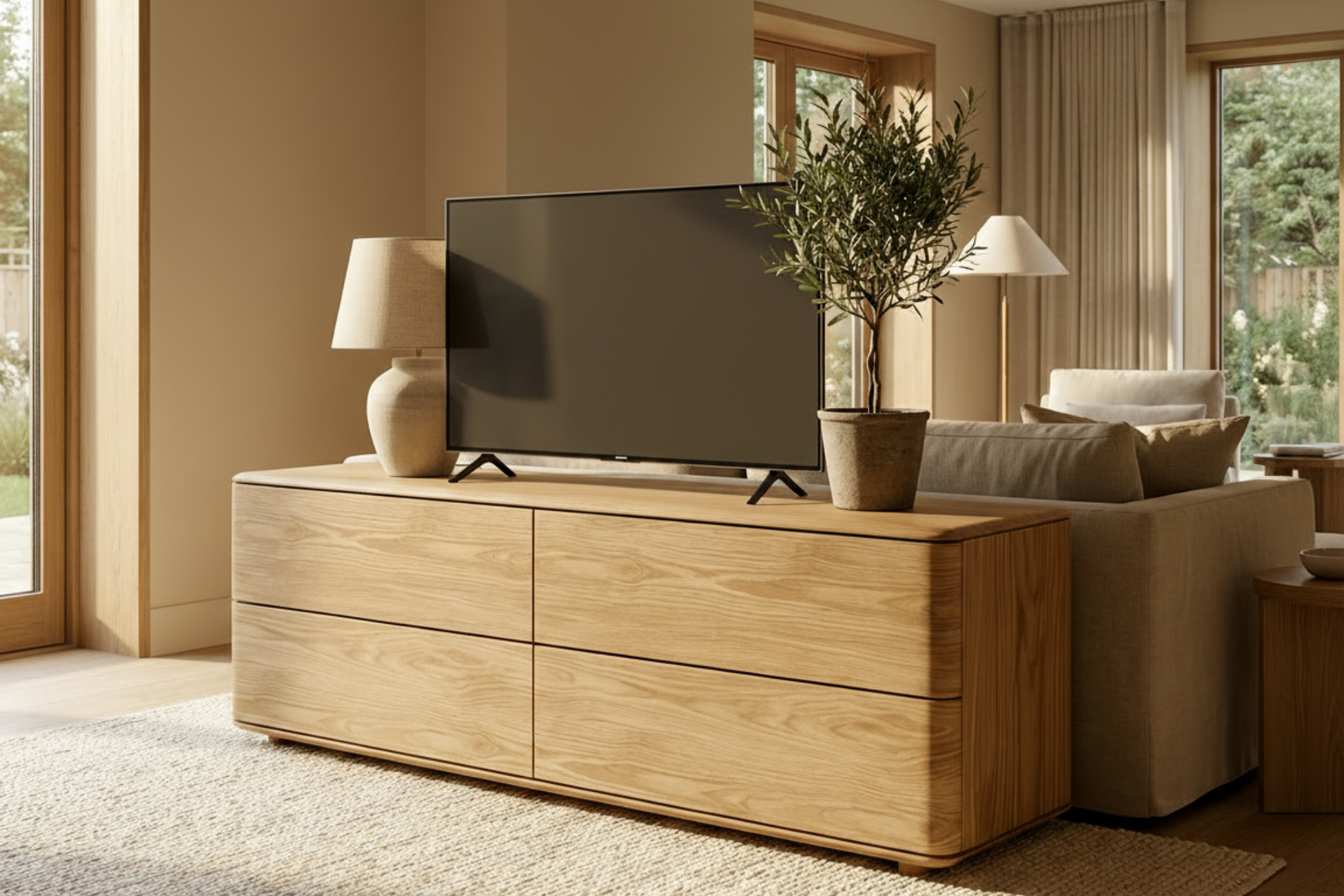
Yes. The first piece of furniture whose design I participated in was the first iteration of the Beams collection, a buffet or TV console. I was 19 and didn't know how to use any design software, so I started drawing by hand. Basically, the first technical drawings for Beams were drawn on a drawing board, with a pencil, T-square, and set square.
7. And what about the most complex product from an execution perspective?
A: There would be several. Two pieces are still being produced: the Elite buffet (which took about three months just to finalize the design) and a dining table currently under construction, with the prototype name "S", which we don't know when it will be ready yet.
I also recall a concept for a furniture piece with a particularly complex base, for which I had to learn new software completely different from what I knew at the time, and I spent about a week just sculpting it in 3D.
I care a lot about these ongoing projects, and I really want to see them realized. 
8. On average, how long does the journey of a new product take from idea/concept to the point where it enters the production phase? How do you know you've reached the ideal form of the product?
A: Here, again, it varies depending on complexity. Generally, it takes no less than 2-3 months from the initial idea to the point where the product is ready for its first delivery, assuming it's a simple concept to implement.
Depending on complexity, it can take years, and this is not so much due to the speed of the manufacturing process, but rather to the discovery of the necessary technologies and techniques to make it feasible.
9. Which stage of the creative process do you find consumes the most resources (time, creative), from your perspective? What brings you the greatest satisfaction in your work?
A: Again, it depends. It could be the concept finalization stage (though this is generally rarer and only for more complex products), the technical design stage (again, varies depending on complexity), or, in most cases, the actual prototype production process and its subsequent improvement to allow for commercialization.
Basically, what takes the longest is that trial-and-error stage until finding a suitable furniture object from all perspectives: aesthetic, functional, and durable.
10. Nord Arin's design language has evolved significantly over the years, and you, along with your father, have played a crucial role in this evolution. How would you define the design style that best represents you?
A: I don't know if I could pinpoint one word and then claim it as my design style. But I think a sum of fitting words here could be "contemporary, relevant, niche," perhaps even "experimental," and, I like to believe - "timeless."
Every time I approach the end of a project, I try to ask myself: "Would I put something like this in my home? Would I look at it admiringly? And even if it becomes part of my daily life, would it stand out from the other objects I have in my home?" And I strive for the answer to all these questions to be affirmative.
11. What are the most important aspects you consider when designing a new piece of furniture – that checklist you never deviate from?
Among the most important aspects, which I always return to in the creative process, is that the furniture must interact in some way with the human body, consider ergonomics and be pleasant to use, but at the same time, be something that people value in their home.
Every time I approach the end of a project, I try to ask myself: "Would I put something like this in my home? Would I look at it admiringly? And even if it becomes part of my daily life, would it stand out from the other objects I have in my home?" And I strive for the answer to all these questions to be affirmative. 
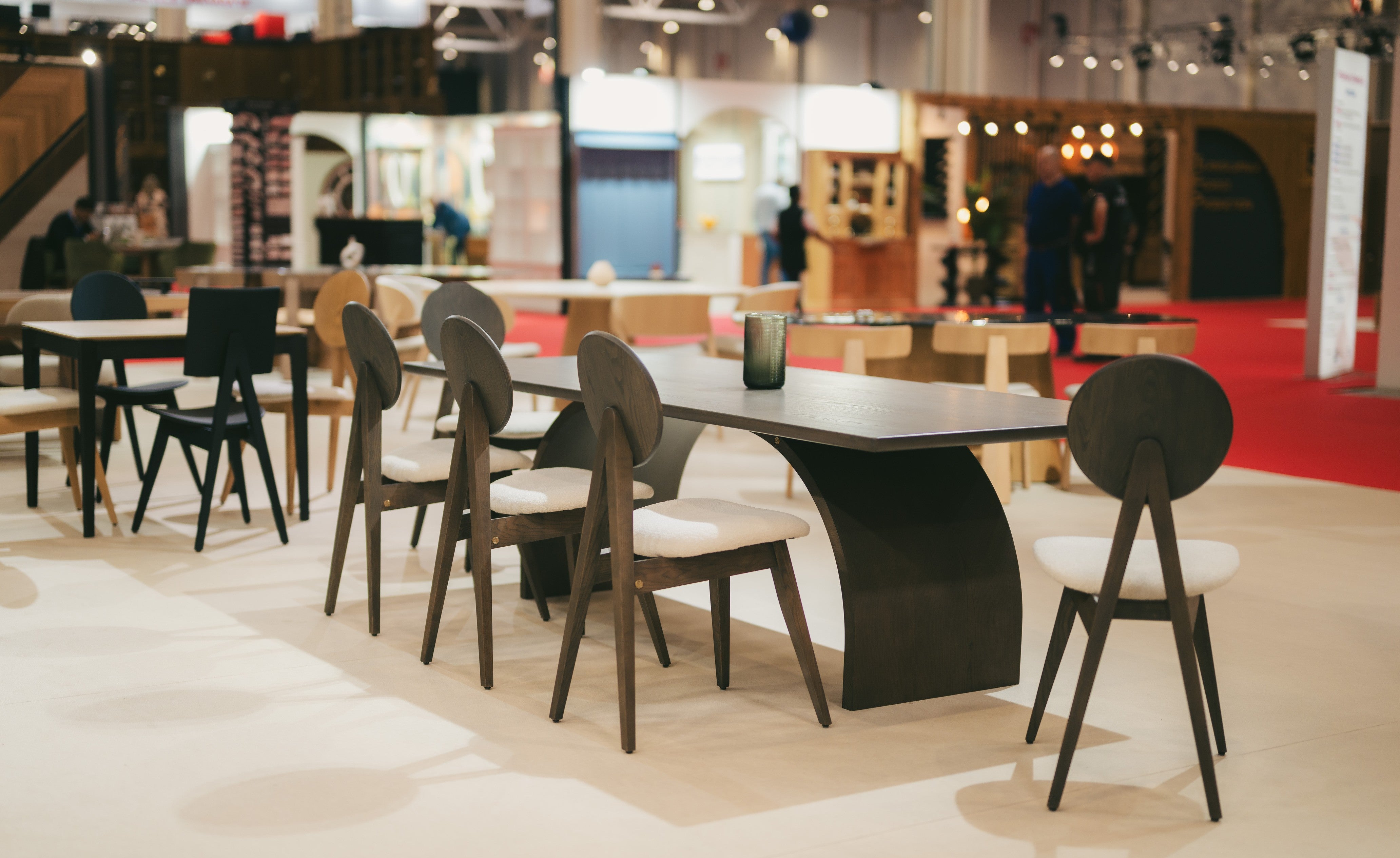
12. Last year, you launched your own brand at ICFF New York, a prestigious international fair dedicated to contemporary furniture. What reactions did you receive and what's next for the VOICU brand?
A: The reactions were positive and numerous, especially from niche project areas, from various designers and architects who have all kinds of projects in New York, as well as in other parts of the United States.
At the ICFF booth, the Eve and Cortina dining tables stood out quite a bit, due to their distinct, organic appearance. Many industry professionals expressed their intention to work with us.
I also had the pleasure of meeting Karim Rashid - a prominent designer whom I greatly appreciate for his chromatic and at the same time playful style in design - who visited our booth. 
This year, together with Nord Arin, I've already participated in two important international fairs: Maison&Objet and Salone del Mobile, and soon we'll be in Bucharest, at BIFE-SIM, the most important event dedicated to the furniture industry in Romania.
On this occasion, I invite as many Romanians as possible to Romexpo between September 18-21, to discover the latest creations of Romanian manufacturers. At the Nord Arin stand, they will be able to see both premiere concepts and emblematic solid wood living and dining collections - models already validated and appreciated at major design fairs around the world.
13. Why do you consider wooden furniture special, and how important is it to integrate it into our living spaces today?
A: Because I believe human nature is still connected to the rest of the natural world.
And I also believe it's a healthy reaction to the over-saturation of artificiality around us.
Having authentic wooden furniture pieces in your home is, in my opinion, more than a desire to have something precious to adorn the interior and be visually pleasing; it can even be an exercise in mental health, trying to reproduce, even to a small extent, the natural world in the comfort of your home.
Wooden furniture is a healthy reaction to the over-saturation of artificiality around us.
14. Finally, a recommendation for readers: what aspects should be considered when choosing living and dining room furniture?
R: A recommendation would be to think about what they want from it. Do they want to change it often? Or do they want to keep it as a timeless testimony to the times they live in? And if so, what do they want that testimony to look like? Is furniture more than just a strictly functional object for them? And if so, how will that furniture fit into the rest of the house? How does it complement the "picture" of their home?
That object can become an occasion for meditation - how was it made, from what materials, what kind of knowledge is involved in its creation, what will happen to it in the future? I think it depends on each individual here.
A piece of furniture can become an occasion for meditation - how was it made, from what materials, what kind of knowledge is involved in its creation, what will happen to it in the future?

15. What do you consider to be the three most important trends in furniture design that will prevail in the next 3-5 years? How do your creations respond to these trends?
R: I strongly believe that the prevailing trends in furniture design will be linked to authenticity, craftsmanship, and identity: pieces of furniture that have been conceived and crafted by people, with all their skill and expertise, reflecting the local specificity of the culture/region they belong to.
The world is oversaturated with mass-produced consumer goods, of low quality, that meet specific needs and nothing more; with artificial, plastic products, originating from places completely foreign to them.
This is where our furniture best meets the needs of people looking to distance themselves from hyper-consumerism and fast-furniture, who seek authenticity. Nord Arin furniture is made from solid wood, a natural material, easy to accept, as it is natural and found here, in our forests.
Moreover, behind each piece lies a great deal of knowledge and conceptualization work, to push the formal limits of the furniture, to make it different without taking away its naturalness.
The world is oversaturated with mass-produced consumer goods, with artificial, plastic products, originating from places completely foreign to them. This is where Nord Arin furniture best meets the needs of people seeking authenticity.

***
Through its collections, Nord Arin promises to bring refined art, craftsmanship, and tradition to every living and dining space, through premium solid wood furniture with contemporary design and created with respect for nature.
VOICU harmoniously combines natural elements with global trends, resulting in functional and durable furniture pieces that elegantly stand the test of time. Through his unmistakable style, the designer integrates tradition and innovation into each piece of furniture, combining technology with craftsmanship to create new artistic expressions and manifestations of contemporary style.
With his help, Nord Arin's promise becomes a certainty, and the journey from a simple idea to works of art in our customers' homes is a fascinating exploration of new frontiers in contemporary furniture design.

Leave a comment
All comments are moderated before being published.
This site is protected by hCaptcha and the hCaptcha Privacy Policy and Terms of Service apply.