
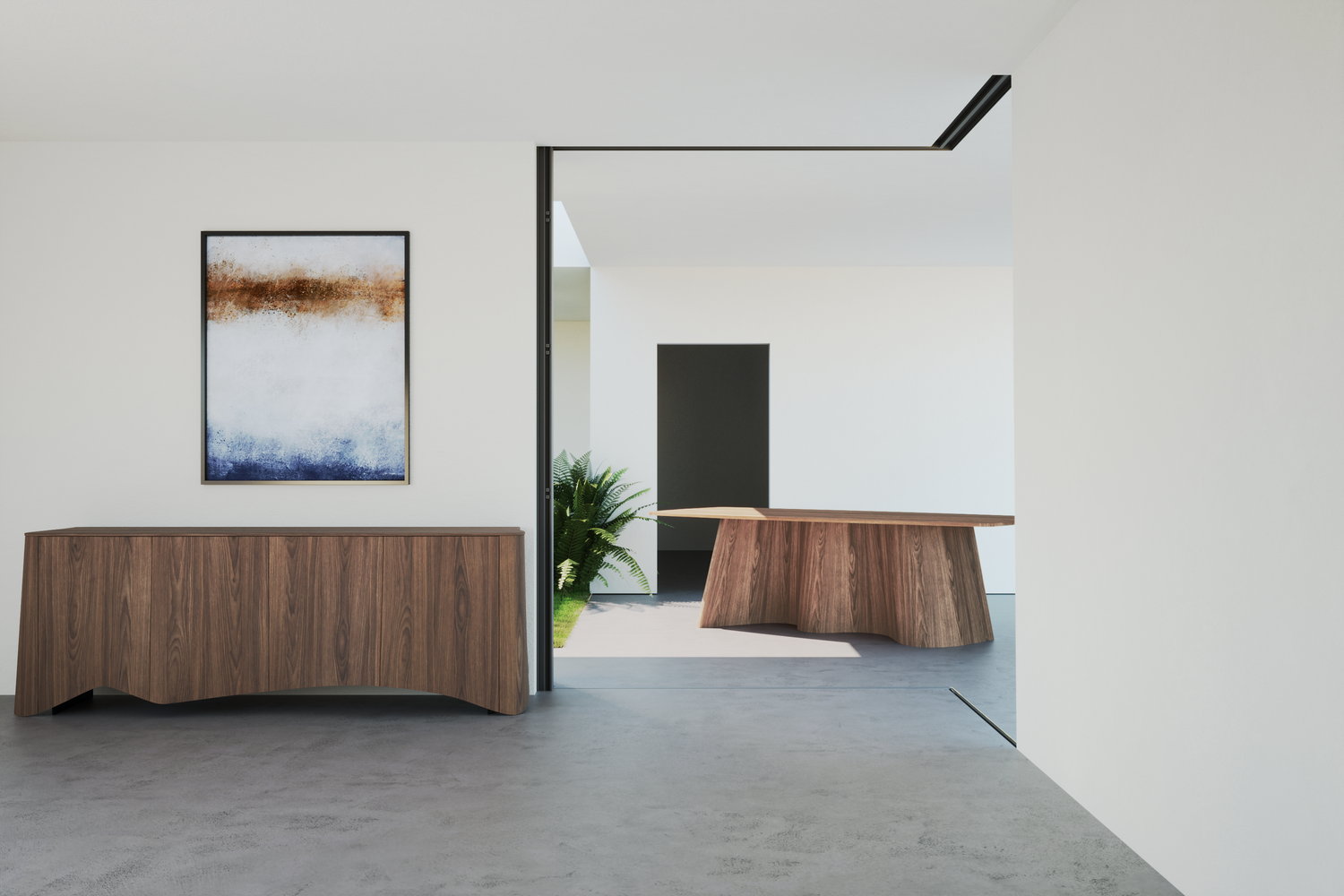
For some, minimalism is a simple visual aesthetic, a term associated with a bright space, furnished with simple, unornamented furniture and decorations. However, increasingly, minimalism has become a philosophy of life, a way of living with intention; of choosing less, but better, of prioritizing quality over quantity.
Minimalism is not a fleeting trend, but a movement with deep roots, which today acquires new valences, especially for those who want a more balanced, authentic, and sustainable life.
The roots of minimalism: from art to lifestyle
Minimalism has its origins in 20th-century art and architecture, as a reaction to excess, ornamentation, and the rising consumerist culture.
More specifically, minimalism became known in New York in the late '50s and early '60s, when many artists began to move away from the cluttered style and excessive layers of abstract expressionism.
They approached their works from a more objective and literal perspective, favoring geometric forms and simple lines—an approach that was later adopted in architecture, product design, and interior design.

Minimalism as a new perspective on life was strongly influenced by Japanese Zen philosophy, where simplicity, tranquility, and harmony with nature are fundamental principles.
In furniture design, minimalism took shape with the development of modernism in architecture. The expression "Less is more" by Ludwig Mies van der Rohe, considered one of the pioneers of modern architecture, is famous.
Today, minimalism is no longer limited to art or architecture, but manifests itself in multiple areas of life:
-
Home decor. In our homes, minimalism translates into functional and comfortable furniture, simple lines, free surfaces, natural materials, and airy spaces with plenty of natural light.
-
Fashion style. A minimalist clothing style means capsule wardrobes, with versatile and quality pieces that can be successfully combined with each other. Minimalism in this area of our lives also means thoughtful shopping, special attention to materials, cuts, and seams, and clothing pieces viewed more as investments than as simple recurring expenses.
-
Daily habits. Minimalism as a philosophy of life involves reducing unnecessary consumption and waste of all kinds, choosing sustainable products and services, as well as eliminating objects and habits that do not correspond to our values and desired lifestyle.
- Time management. Perhaps one of the most difficult changes we can make on the journey towards a minimalist lifestyle is how we organize our time. Minimalism involves eliminating distractions, prioritizing meaningful activities that bring us peace, joy, and contribute to our overall well-being, as well as cultivating life experiences instead of accumulating objects.

Minimalism in your home: why less actually means more
A minimalist space does not mean a space without personality, but refinement and clarity. It is the place where every object has a well-known role and a story, where furniture is carefully chosen to last over time and to support a conscious lifestyle.
Why does it work?
-
- It creates a sense of order and balance.
-
It reduces visual and mental stress. An organized space also means a calmer mind.
- It encourages choosing quality over quantity. A few carefully chosen pieces of solid wood furniture are worth more than a room furnished with lower quality products that need to be replaced after 2-3 years.
- More time for yourself. Fewer objects mean less maintenance, cleaning, and preoccupation with material things.
- It creates a sense of order and balance.

If outside our home we are greeted daily by an avalanche of visual stimuli, our home is more than just a living space: it is the corner of the world where we recollect ourselves and find our balance.
Minimalism creates precisely this type of refuge: a place where visual tranquility translates into inner peace, and the airy space gives you the impression of freedom, even when the daily pace is overwhelming.
Moreover, minimalism means living in harmony with your values - you don't buy things just because others do, to receive external validation or for that sense of belonging, but you surround yourself with what defines you, inspires you, and brings you joy.
Instead of accumulated objects without purpose, you choose for your home authentic furniture pieces and decorative objects made from natural materials, with simple and elegant lines, handcrafted, in small series.
These pieces endure over time and become an imperturbable constant in your life, regardless of the changes that occur over the years. Thus, your home becomes a coherent and balanced space, which successfully counterbalances the noise and chaos from outside.
How a minimalist approach can change your life
We all want to live beautifully and enjoy the best life has to offer, at home and beyond. How can we achieve this ideal? By focusing on what matters and eliminating what is unnecessary, excessive, or inconsistent with our values.
Here's how minimalism can be a strategy for balance:
-
-
At home. Minimalism helps you transform your home into a sanctuary, not a storage unit.
-
In your career. You learn to say "no" to projects that don't add value, to make room for truly important ones.
- In your family. Fewer distractions, less time spent in front of screens, more quality time with loved ones.
-
In your relationship with yourself. You allocate time, attention, and energy to things that truly matter in the long run - health (physical and emotional), peace, cultivating relationships with loved ones, the art of living beautifully.
-
At home. Minimalism helps you transform your home into a sanctuary, not a storage unit.

From austerity to authenticity: the new wave of soft minimalism
If classic minimalism in interior design was perceived as cold, rigid, and austere, in recent years a new trend has emerged, alongside constantly changing needs and lifestyles: soft minimalism. This retains the "less is more" philosophy but dresses it in a warmer and more versatile form, adapted to everyday life.
What is soft minimalism?
-
-
Gentle color palettes. White and grey are replaced by shades of off-white, beiges, earthy tones, soft greys, and pastel tones.
-
Natural textures. Natural materials become indispensable in minimalist interiors in the coming years: solid wood, natural stone, wool, organic cotton, jute, ceramics. Textures are appreciated as close as possible to their natural state, for comfort, authenticity, and a tactile experience that brings us back to the present.
- Using layering. The studied superposition of materials, textures, and colors adds warmth and depth to the interior, eliminating the effect of a "flat" and impersonal space. Layering does not mean cluttering the space, but the intentional superposition of several visual and textile elements with different but complementary shapes and textures. In the living room, place a wool throw and a decorative linen pillow on the sofa, in a different shade of the same color, for a ton-sur-ton effect. In the dining room, place a sculptural ceramic or glass vase on the solid wood table, in which you arrange a few dried branches or eucalyptus stems, for structure and that warm accent from nature. Thus, you get a space that invites calm and balance - a room that visually and sensorially "embraces" you.
-
Furniture with simple lines, but with fine details. Furniture remains faithful to simple silhouettes and clean surfaces, but organic forms, with rounded edges and corners, artisanal details, and tactile surfaces that invite discovery are increasingly appreciated.
- Welcoming atmosphere. Interiors decorated according to the principles of the new soft minimalism include fewer but more personalized objects, conveying warmth, balance, and refinement. The key lies in details and emotion. Everything is studied, and nothing is left to chance, for a coherent visual discourse and a well-defined identity of the space.
-
Gentle color palettes. White and grey are replaced by shades of off-white, beiges, earthy tones, soft greys, and pastel tones.
One thing is clear: soft minimalism changes the paradigm of minimalist interiors. We are no longer just talking about airy and functional spaces, but about interiors with soul, where contemporary design meets emotion.
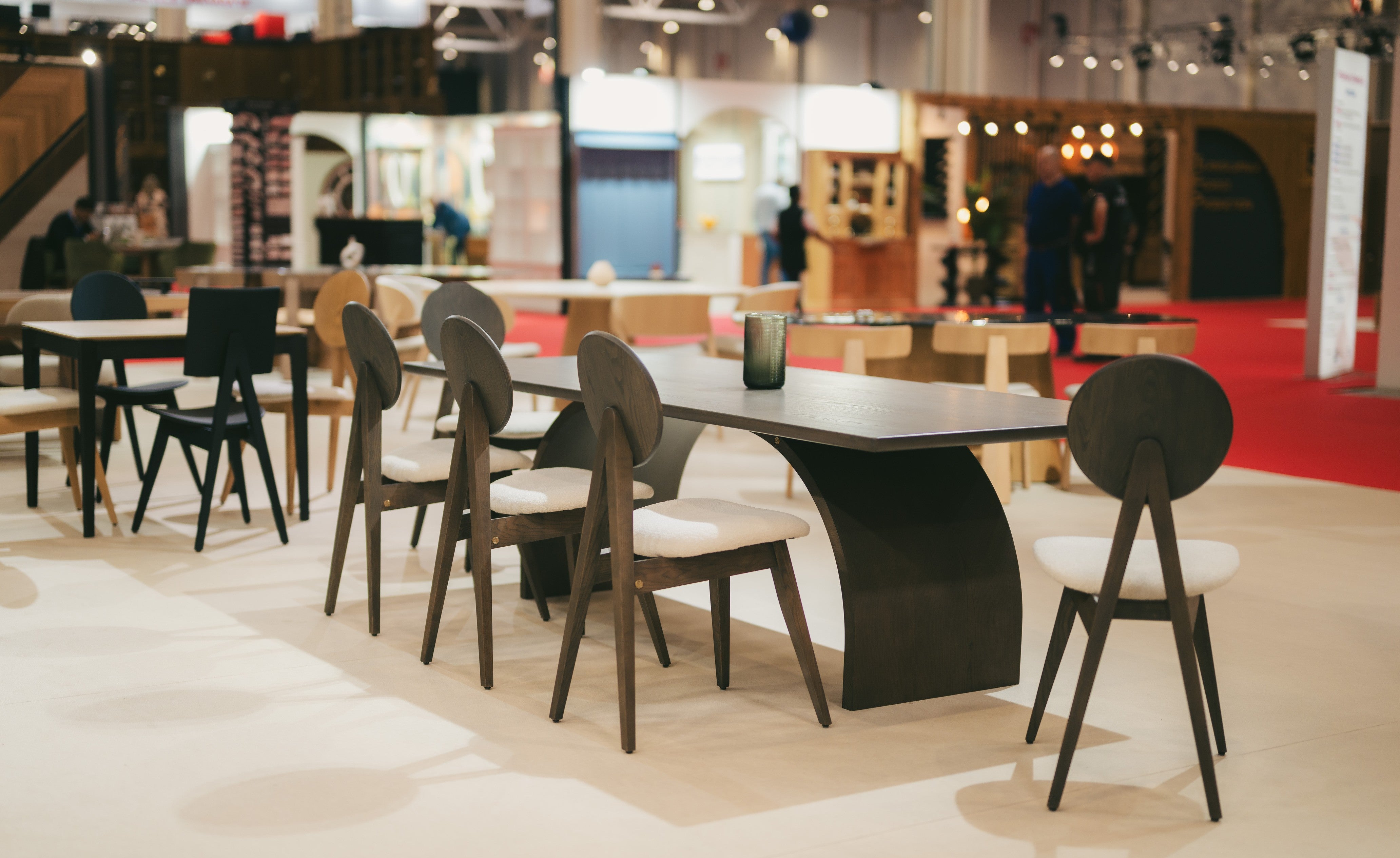
A dining room decorated in this style can include a solid wood table with fluid lines, surrounded by comfortable and durable chairs, as well as a sculptural buffet.
Add a few art objects with a strong visual impact, but not overwhelming - a large contemporary painting, a suspended light fixture that mirrors the dining table design, and a minimalist ceramic vase.

A brief 9-step guide to a minimalist lifestyle
1. Redefine what "essential" means to you
Minimalism does not have a unique recipe. Start by asking yourself: What truly matters to me? Essential can mean more time for yourself and your loved ones, more travel/hikes in nature, prioritizing sports and health, and for your home - a space populated only by useful things that you love and/or have special significance.
2. Reorganize your home and let go of excess
Apply the 3-box rule: keep, donate, recycle. For a minimalist lifestyle, you need to part with objects that no longer bring you joy or utility, and the three-box rule can be very helpful. Freeing up space brings a feeling of relief and control.
3. Invest in quality, not quantity
Choose quality where it truly matters. Eating habits eventually come at the cost of your health, sooner or later; opt, as often as possible, for whole, seasonal foods and organic products, where locally available.
For home decor, a solid wood dining table that will be the center of family evenings for decades, a timeless design bookcase that houses your beloved titles, or a desk made of durable materials that fosters concentration and productivity, will bring you long-term satisfaction and joy.
4. Create airy, breathing spaces
Do not overcrowd rooms. Leave space for light and good mood to circulate freely. A minimalist living room becomes a stage for moments of connection and relaxation.
5. Adopt a capsule wardrobe
Choose versatile, quality clothing pieces that match each other, simplify your daily decisions, and save you time. Minimalist style is an exercise in elegance and discipline.
6. Simplify your daily routine
From morning rituals to work schedules, try to eliminate noise and keep only what brings you clarity and energy. Prioritize moments of quiet, sleep, sports, and connections with loved ones.
7. Learn to say "no"
Minimalism applies not only to objects but also to relationships, daily activities, or projects. Choose carefully where you invest your time and energy; remember the principle "where you direct your attention, there your energy will concentrate."
8. Choose experiences, not objects
Vacations, painting classes, visits to museums and art galleries, quiet evenings with family – these are the true memories that will prove their value over time.
9. Build a meaningful space at home
Pieces made of natural materials, fewer but handcrafted, objects with a story or works of art by local artists – all create an atmosphere at home that reflects your personality and aspirations.
 Minimalism as an art of living
To live minimally does not mean to live austerely, but to offer yourself the luxury of simplicity and clarity.
It means choosing with intention: when it comes to your time, the people you surround yourself with, what you wear, what you read, or what you have in your home. By choosing authenticity and balance in all aspects of your life, you can fully experience the benefits of the art of living beautifully, aligned with who you truly are.
Minimalism is, in essence, a continuous exercise in beauty and refinement: the science of living fully, with less.

Leave a comment
All comments are moderated before being published.
This site is protected by hCaptcha and the hCaptcha Privacy Policy and Terms of Service apply.